
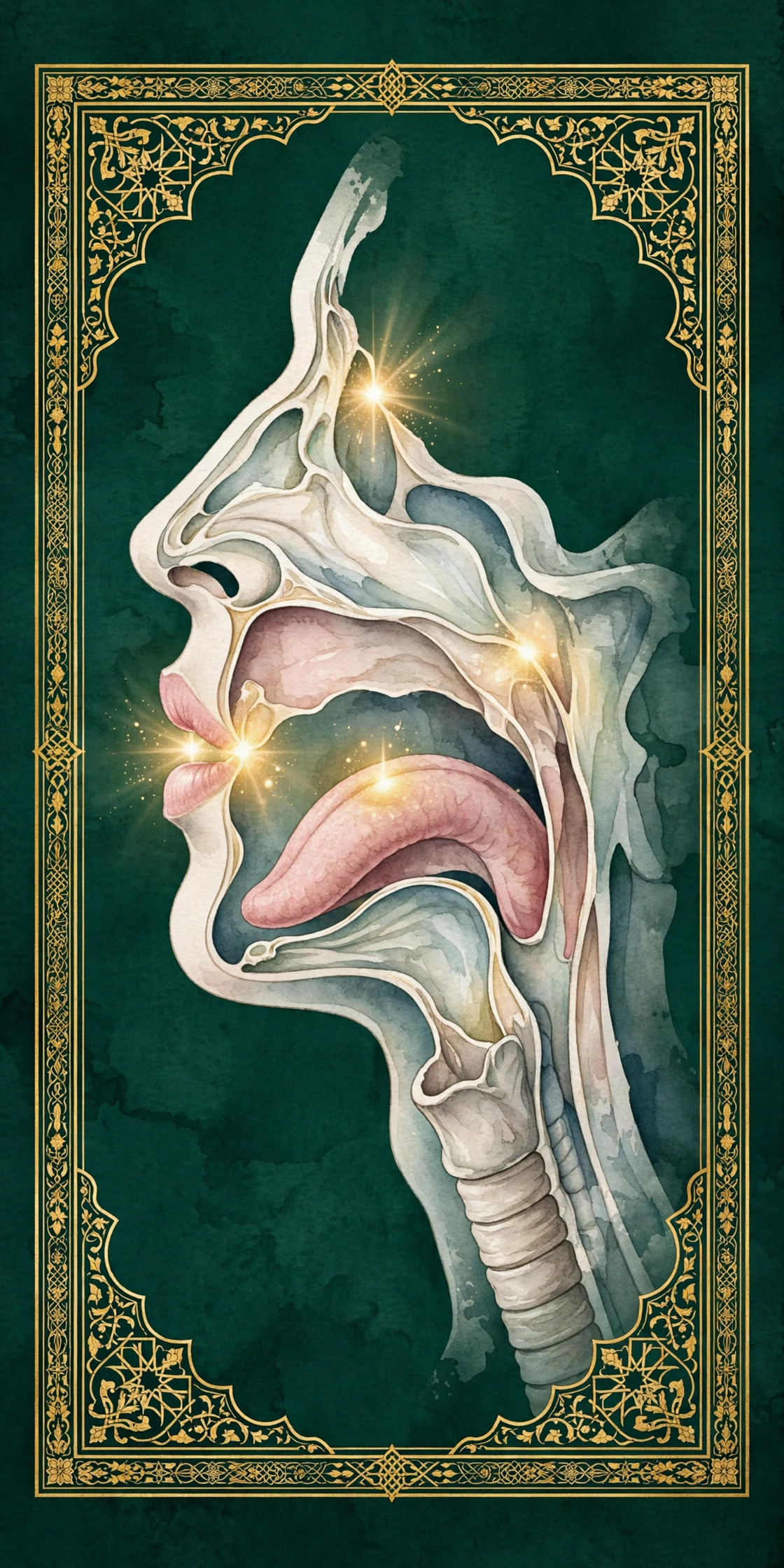
Makharij al-Huroof: The Articulation Points of Arabic Letters
Why Do ث, س, and ص Sound Different?
To an untrained ear, some Arabic letters sound identical. But swapping them changes meanings. Most recitation errors trace to letters pronounced from the wrong place. Solution: Learn Makharij al-Huroof — the exact points where every letter is born.
What Are Makharij al-Huroof?
Makharij (مخارج) = “exit points” — precise locations where each letter’s sound originates. Classical scholars identified 5 major areas with 17 specific points.
The 5 Articulation Areas
1. Al-Jawf (الجوف) — The Oral Cavity
The three madd letters: ا (Alif), و (Waw), ي (Ya).
2. Al-Halq (الحلق) — The Throat
Deepest: ء ه | Middle: ع ح | Nearest: غ خ
3. Al-Lisan (اللسان) — The Tongue
18 letters: back (ق ك), middle (ج ش ي), edge (ض), tip (ل ن ر ط د ت ص س ز ظ ذ ث).
4. Ash-Shafatan (الشفتان) — The Lips
و ب م ف
5. Al-Khayshoom (الخيشوم) — The Nasal Cavity
Where ghunnah (nasalization) resonates.
Common Makhraj Mistakes
- ح as ه → ح is middle throat, ه is deep throat
- ص/س confused → ص heavy, س light
- ض as د → ض is tongue’s edge, unique in all languages
- ق as ك → ق deeper, ك palatal
How to Practice
Learn one area at a time. Use a mirror. Exaggerate at first. Record and compare. Get live correction.
Frequently Asked Questions
Q: How many Makharij?
A: 17 points across 5 areas.
Q: Hardest letter?
A: ض (Dad) — tongue’s edge. Arabic is “the language of Dad.”
Q: Can adults fix Makharij?
A: Yes, at any age, with conscious practice.