
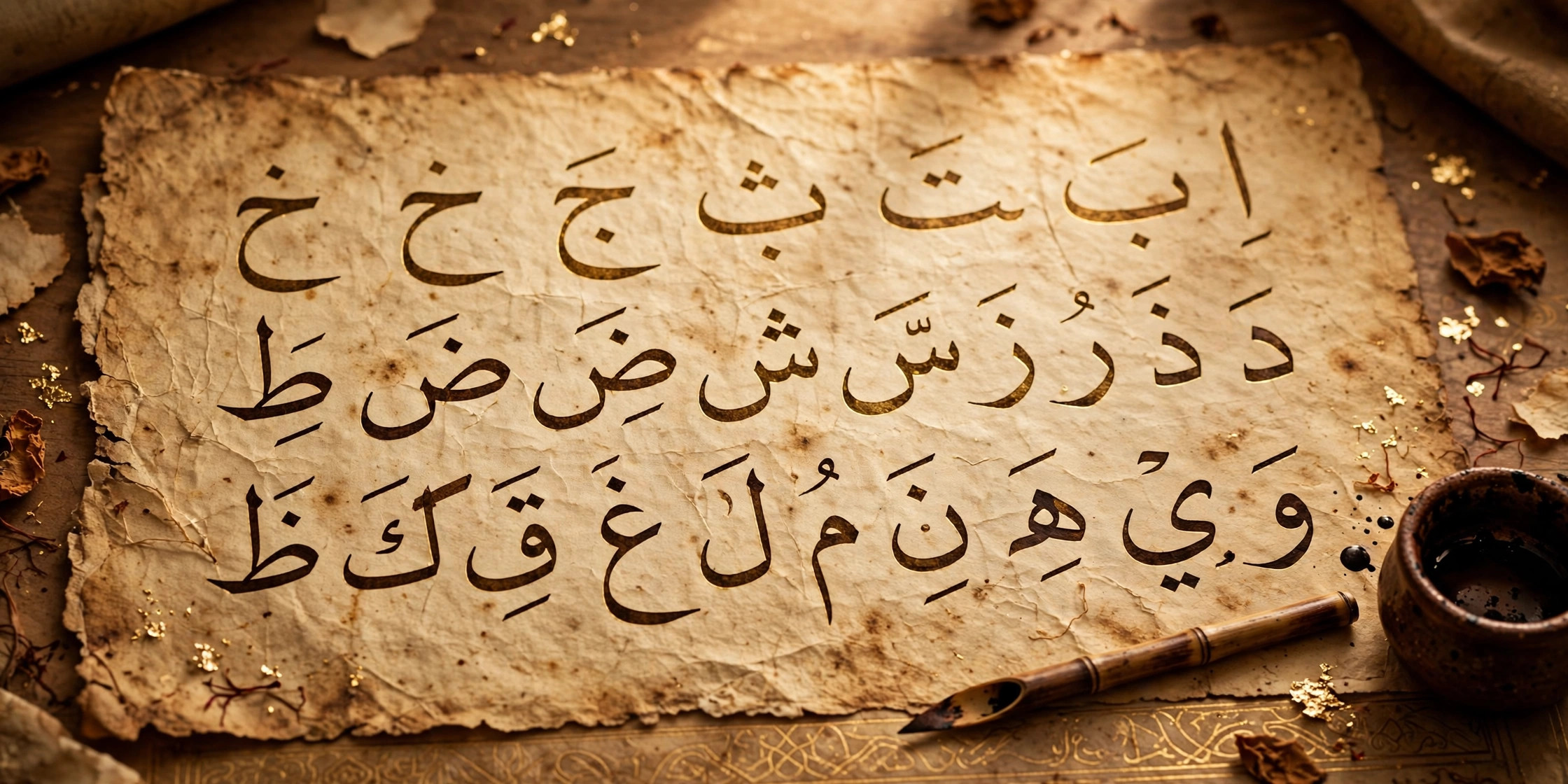
How to Learn the Arabic Alphabet: Complete Beginner’s Guide
28 Letters Stand Between You and the Quran
Everything in the Quran — every verse, every dua, every surah — is built from 28 letters. Learn them, and you’ve taken the single most important step toward reading the Quran yourself.
English speakers face two real challenges: unfamiliar letter shapes and sounds that don’t exist in English. Both are solvable with a systematic approach.
This guide gives you the complete alphabet with pronunciation help, explains the 6 sounds that trip up English speakers, teaches joining rules, and lays out a practical 4-week plan.
The 28 Letters
| Letter | Name | Approximate Sound |
|---|---|---|
| ا | Alif | “a” (as in “father”) |
| ب | Ba | “b” (as in “boy”) |
| ت | Ta | Soft “t” (as in “tea”) |
| ث | Tha | “th” (as in “think”) |
| ج | Jim | “j” (as in “jam”) |
| ح | Ha | Breathy “h” (no English equivalent) |
| خ | Kha | Like clearing the throat |
| د | Dal | Soft “d” |
| ذ | Dhal | “th” (as in “this”) |
| ر | Ra | Lightly rolled “r” |
| ز | Zay | “z” (as in “zebra”) |
| س | Seen | “s” (as in “sun”) |
| ش | Sheen | “sh” (as in “she”) |
| ص | Sad | Heavy, emphatic “s” |
| ض | Dad | Heavy “d” (unique to Arabic) |
| ط | Ta | Heavy, emphatic “t” |
| ظ | Zha | Heavy “th” (emphatic) |
| ع | Ayn | Deep throat sound (no equivalent) |
| غ | Ghayn | Similar to French “r” |
| ف | Fa | “f” (as in “fun”) |
| ق | Qaf | Deep “q” from the back of the throat |
| ك | Kaf | “k” (as in “kite”) |
| ل | Lam | “l” (as in “light”) |
| م | Mim | “m” (as in “moon”) |
| ن | Noon | “n” (as in “noon”) |
| ه | Ha | Soft “h” (as in “hello”) |
| و | Waw | “w” (as in “water”) |
| ي | Ya | “y” (as in “yes”) |
The 6 Difficult Sounds (Spend Extra Time Here)
These sounds don’t exist in English. Most beginners need a teacher’s feedback to get them right:
- ح (Ha) — breathy sound from the middle of the throat
- ع (Ayn) — deep, constricted sound from the throat
- خ (Kha) — like clearing the throat (similar to German “ch”)
- غ (Ghayn) — a gargling sound (similar to French “r”)
- ق (Qaf) — a deep “k” produced from the back of the throat
- ض (Dad) — a heavy “d” unique to Arabic, produced with the side of the tongue
Important: Videos can demonstrate these, but only a teacher listening to your pronunciation can confirm you’re producing them correctly.
Letter Forms: 4 Shapes Per Letter
Most Arabic letters change shape depending on their position in a word:
| Position | Example with Ba (ب) |
|---|---|
| Isolated | ب |
| Beginning | بـ (as in بـاب) |
| Middle | ـبـ (as in كـبـير) |
| End | ـب (as in كتاب) |
Key exception: 6 letters don’t connect to the following letter: ا د ذ ر ز و. They only connect backward to the previous letter, which “breaks” the chain.
The 4-Week Learning Plan
Week 1: Letters 1–7 (ا ب ت ث ج ح خ)
Learn names, sounds, and isolated forms. Write each letter at least 10 times. Drill pronunciation — ideally with a teacher listening.
Week 2: Letters 8–14 (د ذ ر ز س ش ص)
Same method as Week 1. Add 5 minutes of daily review for Week 1 letters — this prevents forgetting.
Week 3: Letters 15–21 (ض ط ظ ع غ ف ق)
This week includes several difficult sounds (ض، ظ، ع، غ). Slow down if needed. Continue reviewing Weeks 1–2.
Week 4: Letters 22–28 (ك ل م ن ه و ي)
Complete the alphabet. Begin practicing letter joining and reading simple words.
Joining Rules
- Most letters connect in both directions (ـبـ)
- The 6 non-connectors (ا د ذ ر ز و) break the forward connection
- Example: In باب (baab), the Ba connects to Alif, Alif doesn’t connect forward, and the final Ba connects back to Alif
Practice exercise: Write ب + ا + ب and observe how Alif creates a break in the connection. Understanding this visually makes reading much easier.
Next Step: Vowels (Harakat)
Once you know the letters, learn the short vowel markings:
- Fatha (َ) = “a” sound (بَ reads “ba”)
- Dammah (ُ) = “u” sound (بُ reads “bu”)
- Kasrah (ِ) = “i” sound (بِ reads “bi”)
- Sukun (ْ) = no vowel (بْ reads “b”)
These markings are what turn letter recognition into actual reading.
Common Mistakes to Avoid
- Rushing through. Master each week’s 7 letters before moving on — shaky foundations cause problems later
- Ignoring the difficult sounds. ح، ع، خ، and غ need dedicated practice, not avoidance
- Skipping writing. Handwriting physically cements letter shapes in memory
- No review. Five minutes of daily review prevents the forgetting that undoes weeks of work
Frequently Asked Questions
Q: How long does it take to learn the Arabic alphabet?
A: Most beginners complete it in about 4 weeks with 20 minutes of daily practice. Intensive learners sometimes finish in 2 weeks.
Q: Should I learn letter names or just their sounds?
A: Learn both. Names matter because teachers refer to letters by name (“this is Jim”), and sounds matter for reading.
Q: Is it normal to confuse similar letters?
A: Completely normal. Beginners commonly mix up ب ت ث (differing only by dots) and ج ح خ. Focused drilling and writing practice resolve this within a couple of weeks.
Q: Do I need to learn to write, or is reading enough?
A: Writing dramatically accelerates learning. Even basic writing practice — not calligraphy — cements the letter shapes far faster than reading alone.
Summary
Twenty-eight letters, four weeks, twenty minutes a day. Give special attention to the 6 sounds that don’t exist in English. Learn the joining rules — especially the 6 non-connecting letters. Write as you learn. This is the foundation everything else builds on.
Learn with expert tutors: Book 3 free trial classes or message us on WhatsApp.