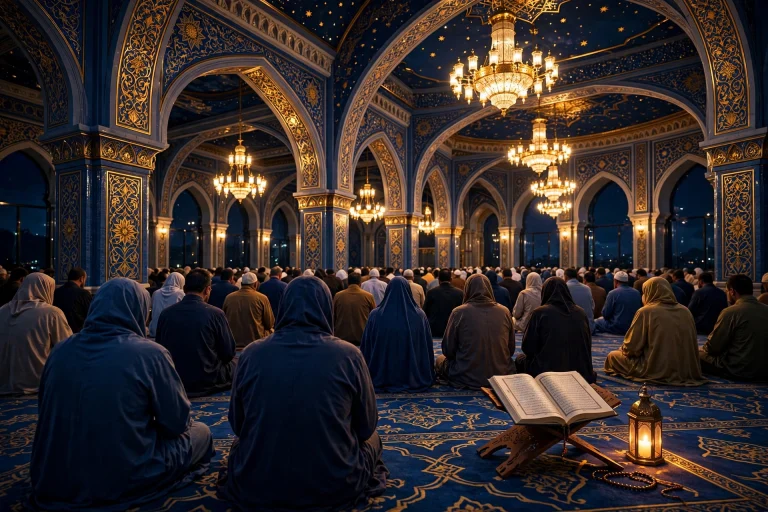

How to Prepare for Ramadan: The Ultimate Checklist
Ramadan is coming — will you be ready, or just busy? Every year, millions of Muslims enter Ramadan with big intentions, then watch the first ten days vanish into fatigue, disorganization, and catch-up. The difference between a transformative Ramadan and a blurry one is rarely willpower. It is preparation.
This guide gives you a complete, practical checklist — spiritual, physical, knowledge, and family preparation — plus a 30-day countdown plan, so you enter Ramadan 2027 (expected February 8, subject to moon sighting — confirm with your local mosque) already in rhythm.
Why Preparation Matters
The Prophet ﷺ and his companions treated Sha’ban — the month before Ramadan — as a training ground. Aisha (RA) reported that the Prophet ﷺ fasted more in Sha’ban than in any other month besides Ramadan (Bukhari & Muslim). They did not “switch on” worship overnight; they warmed up.
Without preparation, three things happen: your body rebels in week one (headaches, exhaustion), your Quran target collapses by day five, and Taraweeh feels like a burden instead of a joy. Preparation solves all three before Ramadan begins. If you are unsure about the actual rules of fasting, read our complete guide to what breaks the fast first — knowledge removes anxiety.
1. Spiritual Preparation
Make up missed fasts. Any fasts missed last Ramadan must be made up before the new Ramadan begins — this is obligatory, not optional. Count them now and schedule them across the coming weeks.
Fast voluntarily. Practice with the Sunnah fasts of Mondays and Thursdays, or the White Days (13th, 14th, 15th of the lunar month). Two or three practice fasts teach your body what to expect.
Build your Quran habit now. Do not wait for day one to open the mushaf. Start with one page a day today, and scale up gradually. Our daily Quran habit guide walks through this step by step.
Learn key duas. Memorize the essential Ramadan duas — especially the Laylatul Qadr dua — before Ramadan, so the nights are spent in dua, not in learning. See our Laylatul Qadr signs and duas guide.
Repent sincerely. Enter Ramadan with a clean slate. Seek forgiveness from Allah and from people you may have wronged — a light heart worships better.
2. Physical Preparation
Adjust your sleep gradually. If you sleep at midnight now, start moving bedtime earlier by 20–30 minutes each week. Waking for Suhoor should not feel like jet lag.
Reduce caffeine two weeks before. Coffee and tea drinkers get the worst first-week headaches. Taper down now — switch to half-caf, then herbal tea — and the first fasts become dramatically easier.
Plan Suhoor and Iftar meals. Decide your Suhoor staples (oats, eggs, dates, water-rich foods) in advance. Read the Sunnahs of Suhoor and Iftar to align your meals with the Prophet’s ﷺ guidance.
3. Knowledge Preparation
Many Ramadan anxieties come from not knowing the rules. Before Ramadan, learn: what breaks the fast and what does not, how Taraweeh works (8 or 20 rakats — our beginner’s Taraweeh guide covers both), and the rulings of Zakat al-Fitr — amount, timing, and who receives it (see our Zakat al-Fitr guide). An hour of learning now saves weeks of doubt later.
4. Family Preparation
Prepare your kids early. Talk about Ramadan with excitement, decorate the house together, and let young children “practice fast” for a few hours. Never force — love first, obligation later (at puberty).
Schedule worship first. Block Taraweeh and Quran time in your calendar before work and social commitments fill it. What gets scheduled gets done.
Set a charity budget. Decide your Ramadan giving in advance — daily small charity beats a last-minute scramble, and the last ten nights deserve your best.
5. Your 30-Day Countdown Plan
Days 30–21: Make up missed fasts, build the Quran habit (1 page/day), memorize key duas, start tapering caffeine.
Days 20–11: Add night prayers (even 2 rakats), begin charity giving, involve the kids, adjust sleep schedule.
Days 10–1: Deep repentance, finalize your Ramadan schedule, stock Suhoor/Iftar essentials, set your Quran completion target, and make sincere intention. You are ready.
Frequently Asked Questions
Q: When is Ramadan 2027?
A: Ramadan 2027 is expected to begin around February 8, 2027, with Eid al-Fitr around March 9 — but the exact dates depend on the moon sighting, so confirm with your local mosque closer to the time.
Q: I still have missed fasts from last year. What should I do?
A: Make them up before the new Ramadan begins — this is obligatory. If you genuinely cannot complete them in time, make up what you can and continue after Ramadan; consult a scholar about any expiation if the delay was without excuse.
Q: Is it too late to prepare if Ramadan is only a week away?
A: Never too late. Even one week of tapering caffeine, fixing sleep, and learning the fasting rules will transform your first week. Start today.
Q: Should I set a Quran completion target?
A: Yes — a target keeps you consistent. One full khatmah (one juz per day) is the classic goal, but half or even a few pages daily with understanding is excellent if that is your level. Consistency beats ambition.
Q: How do I prepare my children?
A: With joy, not pressure. Decorations, stories, practice fasts of a few hours, and letting them join Suhoor/Iftar. Read our full parents’ guide to teaching kids Quran for methods that work.
Q: What is the single most important preparation?
A: Sincere intention (niyyah) combined with one consistent habit started before Ramadan — whether that is daily Quran, voluntary fasts, or night prayer. Momentum carries you; starting cold stops you.
Summary
Prepare spiritually (make up fasts, build habits, learn duas), physically (sleep, caffeine, meals), knowledge-wise (fasting rules, Taraweeh, Zakat al-Fitr), and as a family (kids, schedule, charity) — then follow the 30-day countdown. Enter Ramadan already in rhythm, and the month transforms from survival into elevation.
Prepare your heart and your recitation: Book 3 free classes →