
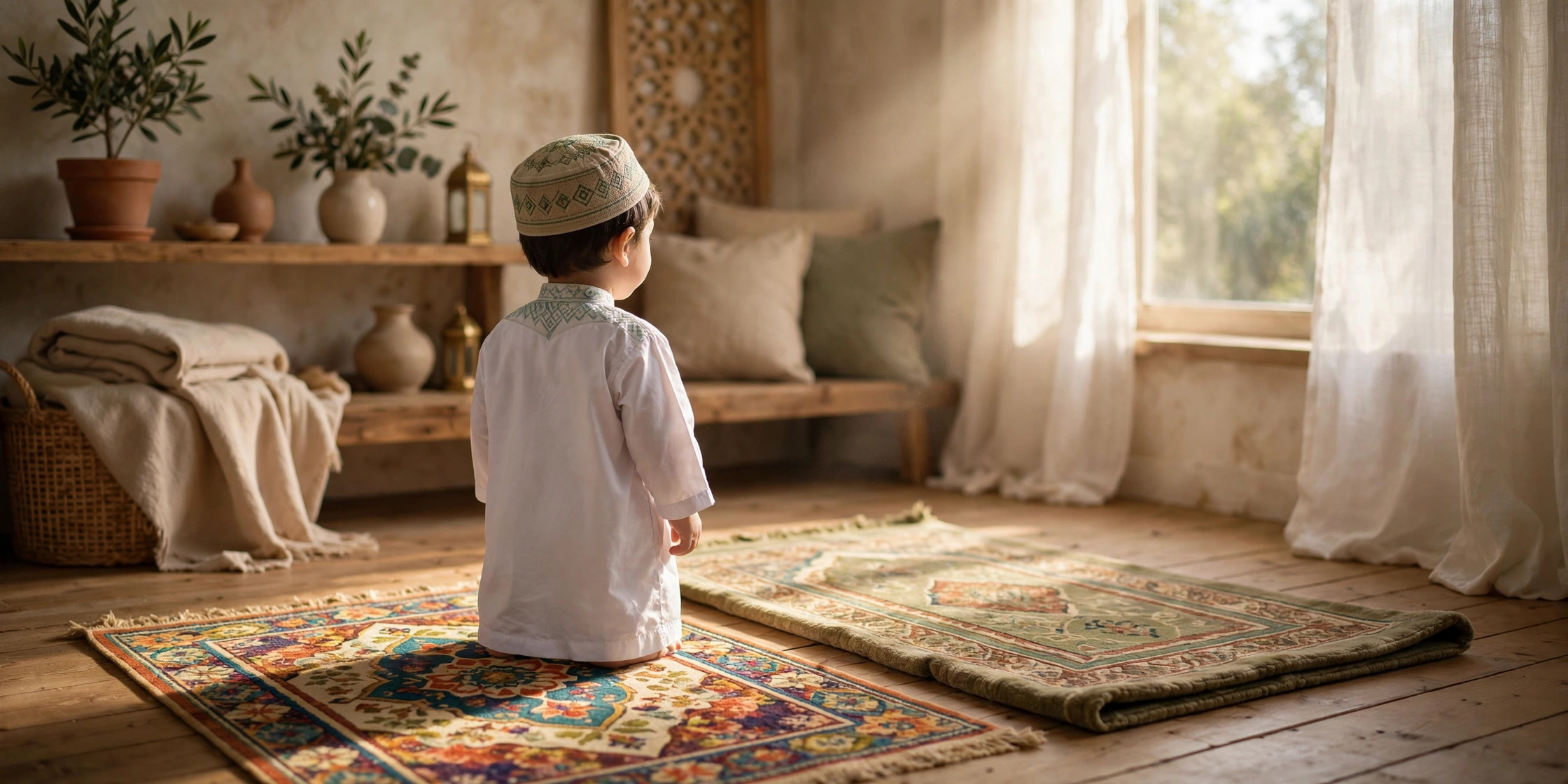
How to Teach Kids Salah: Age-by-Age Guide for Parents
Raise Praying Children — Without Tears (Theirs or Yours)
Your child watches you pray every day but won’t join in. Or worse — they associate Salah with being scolded. Sound familiar? You’re not alone, and it’s fixable.
The problem isn’t your child. It’s the approach. Forcing, yelling, or giving up entirely all backfire. What works is matching your method to your child’s age — exactly as the Prophet ﷺ taught us.
This guide walks you through the prophetic timeline for teaching Salah: what to do at each age, how to make it enjoyable, and how to handle resistance without damaging your child’s relationship with prayer.
The Prophetic Timeline
The Prophet ﷺ said: “Command your children to pray when they are seven, and discipline them for it when they are ten.” (Abu Dawud)
This single hadith gives us a complete framework:
| Age | Stage | Your Approach |
|---|---|---|
| 0–3 | Exposure | Let them watch; no expectations |
| 4–6 | Imitation | Playful learning; no pressure |
| 7–9 | Instruction | Teach properly; encourage warmly |
| 10+ | Expectation | Require consistency with wisdom |
Ages 0–3: The Watching Stage
Goal: Build a positive association with prayer.
At this age, children learn by observation. Your job is simply to let them see Salah as a normal, peaceful part of daily life.
- Pray where they can see you. Don’t hide your prayer
- Give them a mini prayer mat. They’ll “pray” alongside you — let them
- Don’t correct anything. Imitation at this age is perfect as-is
- Praise warmly. “MashaAllah, you’re praying like Mama!” goes a long way
What NOT to do: Never scold a toddler for crawling on you during Sujood. The Prophet ﷺ allowed his grandchildren to climb on him during prayer.
Ages 4–6: The Imitation Stage
Goal: Learn the movements through play.
Children this age love copying. Channel that energy into prayer.
- Teach one position at a time. “This is Sujood!” — make it exciting
- Pray together. Let them follow your movements in real time
- Use visual aids. Prayer posters or kid-friendly apps with animations
- Start with short surahs. Al-Ikhlas is perfect — short and meaningful
- Try a reward chart. Stickers for praying alongside you
Tip: Make Wudu together. Most young children genuinely enjoy the water play involved.
Ages 7–9: The Learning Stage
Goal: Proper Salah with growing understanding.
This is where the Prophet’s ﷺ instruction to “command” begins — but commanding doesn’t mean harshness. Teach seriously, yet joyfully.
- Teach Wudu step by step. Don’t rush this foundation
- Teach one prayer at a time. Maghrib (3 rak’ahs, early evening) is a good starting point
- Teach Al-Fatihah line by line, with simple meanings
- Explain the “why.” “We pray to thank Allah and talk to Him” resonates with children
- Be consistent. Same time, same routine, every day
Effective method: Demonstrate first, then do it together, then watch them try, correcting gently. The “I do, we do, you do” approach works well.
Ages 10+: The Expectation Stage
Goal: Independent, consistent prayer.
At this stage, the prophetic guidance shifts to expectation. But “discipline” means wise consequences — not harshness.
- Require the five daily prayers. This is the prophetic instruction, applied with love
- Use natural consequences. For example: no prayer, no screen time. Calm, not angry
- Wake for Fajr gradually. Start with weekends, then expand
- Visit the mosque together. Especially Jumu’ah for boys
- Check in regularly. Don’t just assume they’re praying — ask kindly
Making Salah Fun (All Ages)
- Prayer chart — visual tracking with small rewards
- Family prayer — pray in congregation at home when possible
- Story time — share stories about the Prophet’s ﷺ own prayer
- Kid-friendly apps — animations make learning engaging
- Celebrate milestones — “You prayed all five today! MashaAllah!”
- Let them choose — their own special prayer mat increases ownership
Handling Resistance
| Problem | What to Try |
|---|---|
| “It’s boring” | Shorten sessions initially; pray together; explain benefits simply |
| “I forgot” | Gentle reminders; set alarms; build it into the daily routine |
| “My friends don’t pray” | Nurture Muslim friendships; strengthen the Islamic home environment; lead by example |
| Outright refusal (10+) | Apply calm consequences per prophetic guidance; make dua; stay patient |
Never: Hit in anger, mock your child, or compare them to siblings. These destroy trust and associate Salah with pain.
The Parent’s Role — The Most Important Factor
Here’s an honest truth: your children are far more likely to pray if they see you praying — consistently, visibly, and with a positive attitude.
- Pray on time (they notice more than you think)
- Pray with a sense of peace, not burden
- Speak about Salah positively in everyday conversation
- Make dua for them regularly — not just at them when they slip
Frequently Asked Questions
Q: What if I wasn’t taught Salah properly myself?
A: Learn alongside your children. It’s genuinely beautiful — “We’re learning this together” creates a bond and removes the pressure of perfection.
Q: Should girls go to the mosque for prayer?
A: It is permissible. Praying at home is also excellent and was the practice of many righteous women. Do what works best for your family’s circumstances.
Q: My 12-year-old refuses to pray. Is it too late?
A: It’s never too late. Stay calm and consistent. Keep the door open — maintain your own practice visibly, keep inviting (not forcing), and make sincere dua. Many teenagers come around with patience.
Q: How do I teach Wudu to a young child?
A: Make it a fun routine. Do it together, narrate each step playfully (“Now we wash our happy hands!”), and praise them. The detailed steps matter less than building the habit at ages 4–6.
Summary
Ages 0–3: let them watch. Ages 4–6: make it playful. Ages 7–9: teach with joy. Ages 10+: expect with wisdom. Model it yourself — that’s the single most powerful teacher. The Prophet’s ﷺ timeline works when applied with love and patience.
Need help teaching your kids? Book 3 free trial classes or message us on WhatsApp.